

How to Fix a Cowlick at the Hairline: The Flat Iron Reset
You finish your blowout. It looks polished. An hour later you catch your reflection and there it is, that one piece flipping the wrong direction, breaking up your face-framing layers, refusing to behave. Cowlicks are one of the most common reasons hair doesn’t lay the way you want, and most people are fighting them with the wrong technique. The hairspray, the gel, the constant tucking behind the ear, none of it addresses the actual cause. The real fix is simpler than you think, and it comes down to resetting the root
instead of styling around it.
Here’s what’s actually happening with your hair, and the exact method we use at EGGIE Salon Studio to
make cowlicks lay flat and stay flat.
What is a cowlick?
A cowlick is a section of hair that grows in a different direction than the surrounding hair, usually at the front hairline, the crown, or along the part. The name comes from the way the swirling pattern resembles a swipe from a cow’s tongue.
Cowlicks are caused by your hair follicle’s natural growth pattern, which means you can’t get rid of them. What you can do is retrain how the hair lays on the surface, and that’s what every stylist trick really comes down to.
What causes cowlicks?
Cowlicks are determined by genetics and the angle at which your hair follicles sit in your scalp. They show up
most often in three spots:
- Front hairline, especially around the temples and forehead
- Crown of the head, where hair grows in a spiral pattern
- Part line, where the natural growth direction shifts
They tend to be more visible if you have fine hair, short hair, or a layered cut, because there’s less weight pulling the hair down and disguising the swirl.
Why your cowlick keeps coming back
Most people make the same mistake. They try to style the cowlick after the rest of the hair is done. By that point, the root has already set in the wrong direction. You can smooth the length all you want, but the hair will pop back up because the cowlick lives at the root, not in the strand.
The fix is to reset the root before you style anything else.
How to fix a cowlick at the hairline (step-by-step)
This is the technique we use on clients with stubborn cowlicks during blowouts. It also works on day-two hair when your cowlick has come back to life.
Step 1: Start with clean, dry hair
Cowlicks are easier to reset when the hair is fully dry. If you’re working with damp hair, blow it out first using a round brush, directing the cowlick area against its natural growth. Apply a heat protectant before any iron touches your hair. We recommend Kevin Murphy HEATED.DEFENSE, which shields against heat damage and reduces frizz at the hairline.

Step 2: Section off the first half inch around your face
Clip the rest of your hair back. You only need to work with the front half inch of hair along your hairline. This is where cowlicks read the strongest and where most of the damage to your style happens.
Step 3: Place the flat iron at the root, not the length
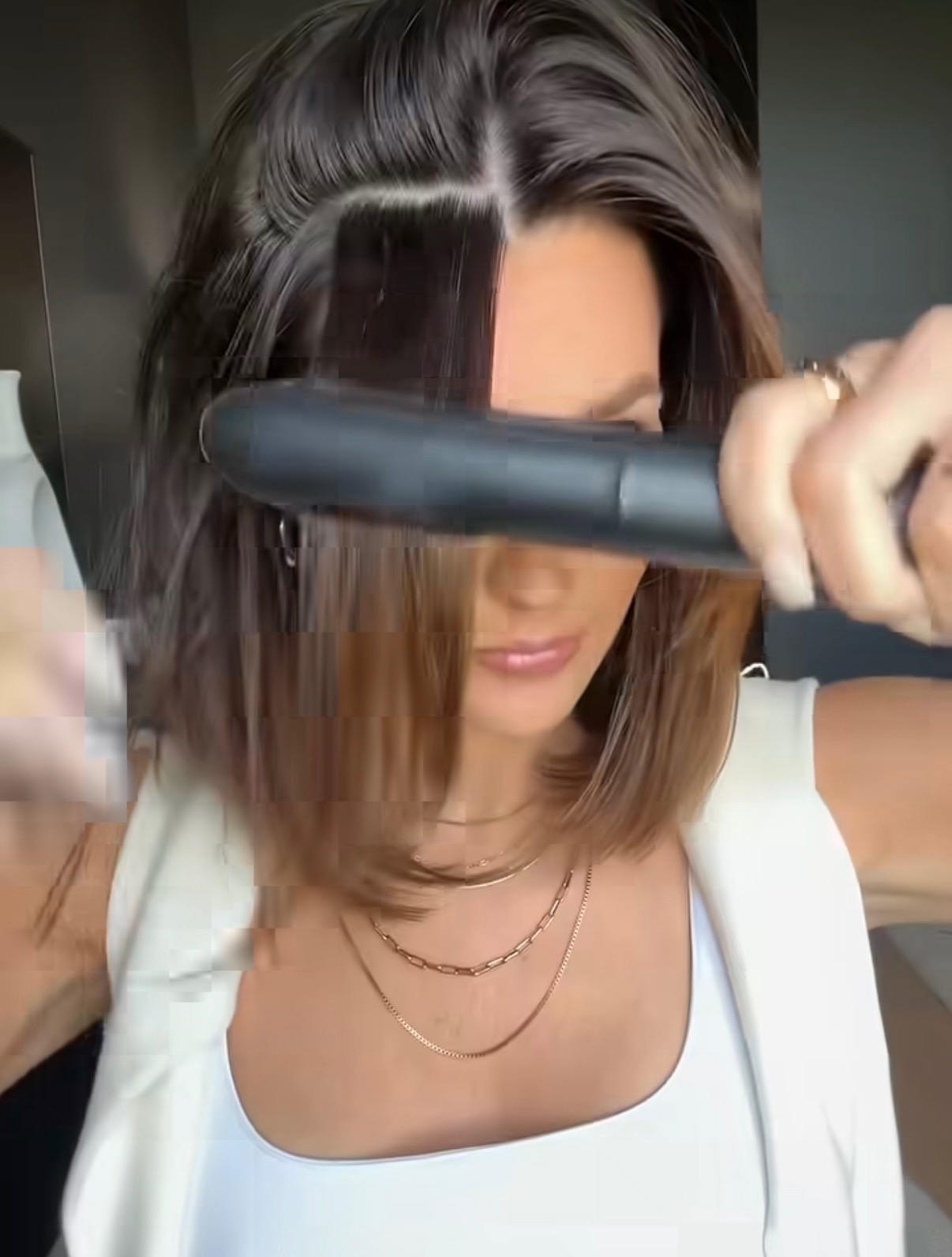
Get the iron as close to the scalp as you can without burning yourself. This is the most important step, and the one most people skip. The cowlick lives in the first quarter inch of hair coming out of your scalp. If you only press the length, you’re not resetting anything.
Step 4: Guide the hair in the direction you want it to lay
Slowly pull the iron through the section, guiding the hair the opposite direction of how it naturally grows. If your cowlick flips right, train it left. If it lifts up, train it forward and down. Use medium tension. You’re shaping, not yanking.
Step 5: Let the hair cool in place
This is non-negotiable. Hair holds its new shape as it cools, not while it’s hot. Hold the section in place for a few seconds after the iron passes, or pin it flat against your head with your fingers until it’s fully cool to the touch.
Finish with a light-hold hairspray to lock it in. Heavy products will weigh down the hairline and cause flipping.
Pro tip: Reset before curling

If you’re planning to curl your hair, do this flat-iron reset on the hairline first. It changes everything about how the curl falls around your face. The bend lands correctly, your face-framing layers behave, and the curl pattern blends instead of fighting your cowlick. This is the difference between a curl set that looks polished and one that looks like it’s fighting your hair.
The tools that actually matter
You don’t need a drawer full of styling products. You need three things that work together:
- A heat protectant that handles hairline frizz (Kevin Murphy Heated Defense is our go-to)
- A flat iron with adjustable heat so you can dial down for fine hair
- A light-hold finishing spray that locks shape without weighing hair down
Skip the heavy gels and pomades at the hairline. They add weight that pulls the cowlick right back into its old
direction.
When to call your stylist
Some cowlicks are too strong or too poorly placed for at-home styling to fully solve. If you’re constantly
battling the same spot, your cut might be the real issue.
A skilled stylist can:
- Cut your layers to work with the cowlick instead of against it
- Adjust your part to disguise a swirling crown
- Recommend a length that hides rather than highlights the growth pattern
A good haircut accounts for your cowlicks. A bad one ignores them and leaves you with the problem every
morning.
Key takeaways
- Cowlicks are caused by follicle direction and cannot be permanently removed
- The cowlick lives at the root, so the root is where you reset it
- Always use heat protectant before applying a flat iron at the hairline
- Let the hair cool in place to lock in the new shape
- The right haircut works with your cowlick, not against it
Cowlicks aren’t a flaw in your hair. They’re a feature of your follicle pattern. The reason most people struggle with them is that they’re styling the length instead of resetting the root. Use a heat protectant, get the iron close to the scalp, guide the hair the direction you want it to lay, and let it cool in place. That sequence is what makes the fix actually hold.
If your cowlick has been winning the battle for months, book a consultation with us at EGGIE Salon Studio. The right cut paired with this technique will change your morning routine completely.
Frequently asked questions
Can you train a cowlick to go away? You can’t eliminate a cowlick because it’s caused by the direction your hair follicle grows out of your scalp. What you can do is retrain how the hair lays on the surface using a flat iron at the root, consistent styling, and a haircut that works with your growth pattern.
Why does my cowlick come back the next day? Because the cowlick lives at the root, not the length. As soon as your hair shifts during sleep or movement, the root pops back up unless you’ve fully reset it with heat and allowed it to cool in place.
Does cutting your hair shorter fix a cowlick? Not always. Shorter and layered cuts often make cowlicks more visible because there’s less weight holding the hair down. The right cut works with your cowlick’s direction, not against it.
What’s the best tool for taming a cowlick? A flat iron with adjustable heat, used directly at the root, is the most effective tool for resetting cowlicks. A round brush with a blow dryer works as a substitute, but holds the shape less reliably than a flat iron.
Can a curling iron fix a cowlick? A curling iron can disguise a cowlick but rarely fixes the root direction. Reset the cowlick with a flat iron first, then curl. The curl pattern will fall correctly instead of fighting the cowlick all day.
Are cowlicks more common in certain hair types? Cowlicks are universal, but they show up more obviously in fine hair, short hair, and heavily layered cuts because there’s less weight to disguise the swirl pattern.
Should I apply product before or after taming the cowlick? Apply heat protectant before. Apply finishing spray after the hair has cooled in place. Heavy styling products at the hairline tend to weigh hair down and cause cowlicks to flip back.
Do you have a tutorial on how to fix my cowlick at my hairline? Yes, you can watch our tutorial by clicking here. Rachel is constantly sharing hair tips and tricks! Be sure to follow her on Instagram.
Book a Blowout Today